
Healthcare Risk Management Courses
Clinical and enterprise risk, FMEA, risk registers.
Risk management helps a hospital find problems before they reach patients. These courses cover clinical and enterprise risk: identifying and scoring risks, proactive analysis with FMEA, maintaining a risk register, and reporting risk clearly to leadership and boards.
Healthcare Risk Management Courses on Medicova
Loading courses...
What you will learn
- Identifying, scoring and prioritising clinical and operational risks
- Failure mode and effects analysis (FMEA)
- Building and maintaining a risk register
- Linking risk management to incident reporting and quality
Who these courses are for
Risk managers, quality and patient safety staff, department heads and hospital administrators.
Where this can take your career
Accreditation standards require a hospital-wide risk management programme, which creates dedicated risk manager and risk coordinator roles.
Related topics
Frequently asked questions
How is risk management different from patient safety?
Is FMEA covered in detail?
Free resources
Related guides from our blog
Risk Management in Healthcare: How to Use FMEA
FMEA (Failure Mode and Effects Analysis) is a proactive risk tool that maps a process, identifies where it could fail, and scores each failure by severity, likelihood and detectability. The resulting risk priority number tells teams which risks to fix first, before patients are harmed.
Patient Safety Goals: A Practical Guide for Clinical Teams
Patient safety goals are priority practices that reduce the most common and serious harms in care. They typically include correct patient identification, effective clinical communication, medication safety, infection prevention, and reducing the risk of patient falls and surgical errors.
Healthcare Quality Management: The Complete Guide (2026)
Healthcare quality management is the systematic effort to measure, maintain and improve the safety, effectiveness and patient-centredness of care. It combines improvement methods such as PDSA and Lean, measurement through clinical indicators, and standards set by accreditation bodies like JCI, CBAHI and GAHAR.
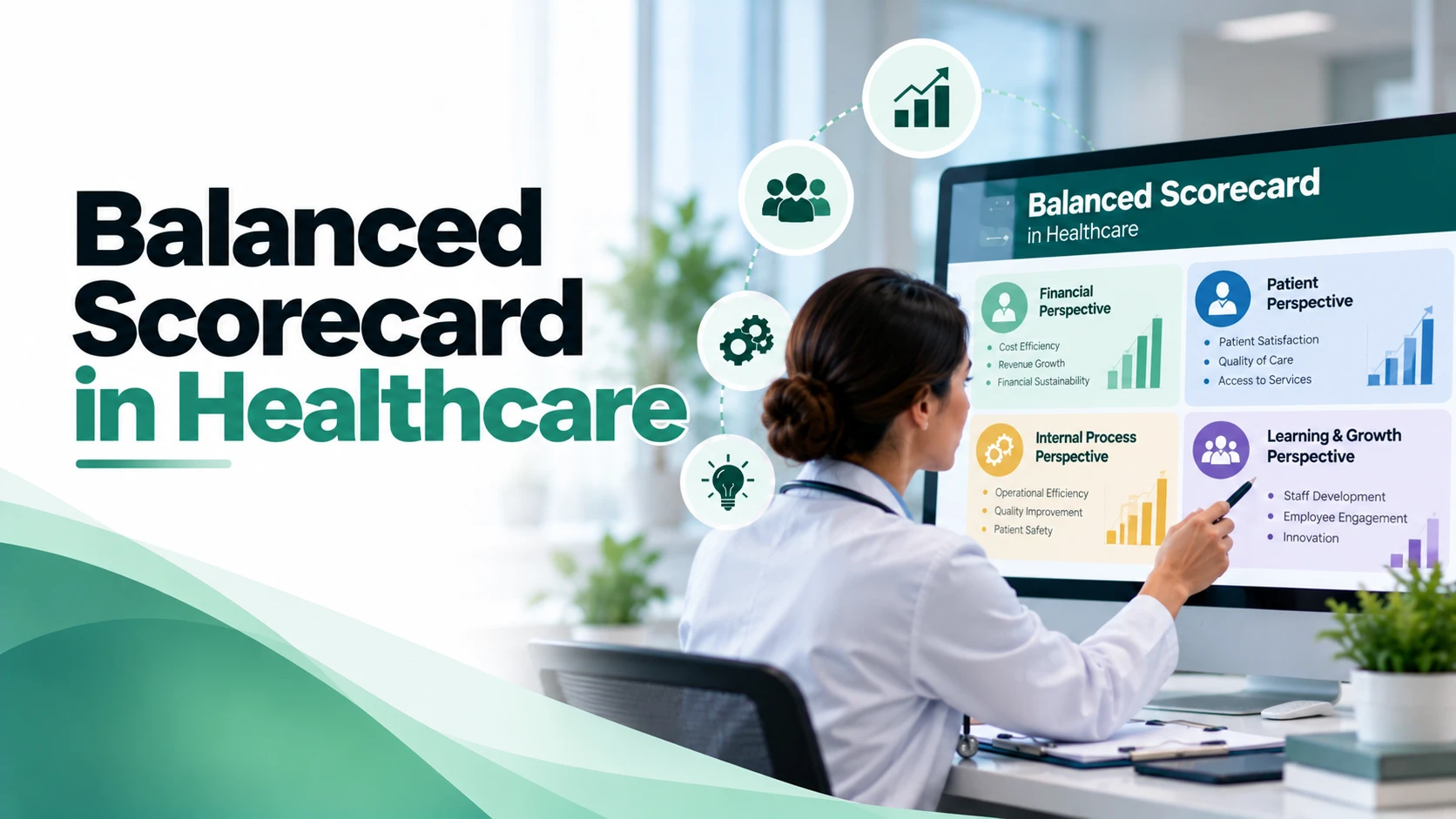
Balanced Scorecard in Healthcare: Perspectives, Hospital KPIs and Example
Balanced scorecard in healthcare explained: the four perspectives, common hospital KPIs, a worked example and the pitfalls research has found.
Can't find the right course?
Browse the full catalogue, or tell us what you need and we'll help you find it.