Healthcare career insights
Practical guides on licensing, salaries, relocation and CPD — written for medical professionals across Egypt and the Gulf.
 Featured
Clinical Skills for Healthcare Professionals: A Complete Guide
Clinical skills are the practical competencies healthcare professionals use to assess and care for patients safely, spanning assessment, procedures, medication safety, infection control, emergency response and communication. They are maintained through ongoing practice, feedback and continuing education.
 DDr Ahmed Habib Jul 2, 2026 4 min
52 articles

Better Patient & Team Communication with SBAR
SBAR (Situation, Background, Assessment, Recommendation) is a structured communication tool that makes clinical handovers clear and complete. It reduces errors by ensuring the listener quickly understands the situation, relevant history, the sender's assessment, and what action is needed.
DDr Ahmed Habib Jul 2, 2026 6 min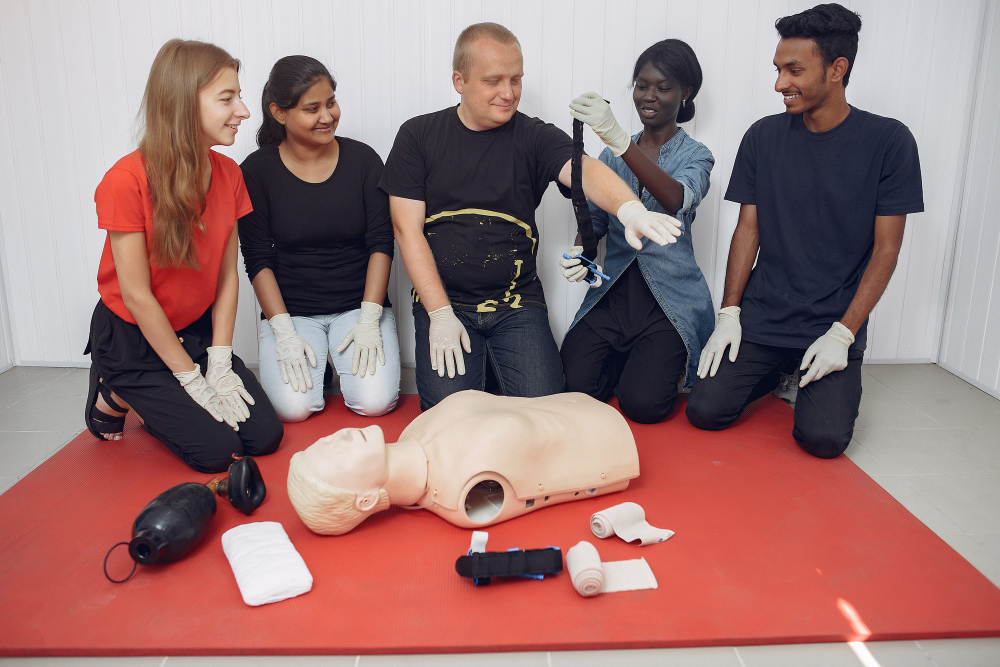
BLS vs ACLS: What's the Difference and Which Do You Need?
BLS (Basic Life Support) covers core resuscitation skills such as CPR and defibrillation for all healthcare workers, while ACLS (Advanced Cardiac Life Support) adds advanced interventions like medications and rhythm management for those managing cardiac emergencies. ACLS builds on BLS.
DDr Ahmed Habib Jul 2, 2026 6 min
Infection Prevention & Control: The Basics for Clinical Staff
Infection prevention and control (IPC) is the set of practices that stop the spread of infection in healthcare. Its foundation is standard precautions, hand hygiene, personal protective equipment, safe handling of sharps and equipment, and cleaning, which together break the chain of infection.
DDr Ahmed Habib Jul 2, 2026 6 min
Preventing Medication Errors: Practical Strategies That Work
Medication errors are prevented by tackling their common causes: interruptions, look-alike drugs, unclear communication and workload. Effective strategies include standardised processes, independent double-checks for high-risk drugs, clear labelling, and technology such as barcode administration.
DDr Ahmed Habib Jul 2, 2026 6 min
Medication Safety: Core Principles Every Clinician Should Know
Medication safety is the set of practices that prevent harm from medicines across prescribing, dispensing and administration. Its foundation is the rights of medication administration, right patient, drug, dose, route, time and documentation, supported by double-checks and clear communication.
DDr Ahmed Habib Jul 2, 2026 6 min10 Essential Clinical Nursing Skills Every Nurse Should Master
Essential clinical nursing skills include accurate patient assessment and vital signs, safe medication administration, wound and infection-control practices, clear documentation, and effective communication and handover. Mastering these fundamentals underpins safe, high-quality patient care.
DDr Ahmed Habib Jul 2, 2026 7 minEvidence-Based Nursing Practice: A Practical Introduction
Evidence-based nursing practice combines the best available research, clinical expertise and patient preferences to guide care. It follows five steps: ask a clear question, acquire evidence, appraise it, apply it to the patient, and assess the outcome, ensuring care reflects current best knowledge.
DDr Ahmed Habib Jul 2, 2026 7 minHow to Study for Medical Exams While Working Full Time
To study for medical exams while working, use short, consistent daily sessions rather than occasional long ones, practise active recall and spaced repetition, drill exam-style questions, and protect a realistic weekly schedule. Consistency and question practice beat cramming for busy professionals.
DDr Ahmed Habib Jul 2, 2026 6 minCareer Development for Pharmacists: Paths Beyond the Pharmacy
Pharmacists can develop beyond dispensing into clinical pharmacy, hospital and health-system roles, the pharmaceutical industry, healthcare quality and management. Each path has its own courses and certifications, so career growth starts with choosing a direction and the credentials that support it.
DDr Ahmed Habib Jul 2, 2026 7 minUpskilling Pathways for Nurses: How to Advance Your Career
Nurses can advance through clinical specialisation (such as critical care or infection control), leadership and management training, quality and safety certifications like CPHQ, and further academic study. The right pathway depends on whether you want deeper clinical expertise, leadership or a move into education or quality.
DDr Ahmed Habib Jul 2, 2026 7 minAre Online CME Courses Accredited? How to Check
Many online CME courses are accredited, but not all, so credits only count if the activity is recognised by your regulator. Verify accreditation by checking the accrediting body named on the course, confirming it is recognised in your country, and keeping your completion certificate as evidence.
DDr Ahmed Habib Jul 2, 2026 6 minHow to Choose an Online Medical Course (Checklist)
To choose an online medical course, check that it is accredited or recognised, that instructors have real credentials, and that the content matches your goals and level. Also confirm whether it offers a certificate, CME credit, updated material and genuine reviews before paying.
DDr Ahmed Habib Jul 2, 2026 7 minCPD Requirements for Healthcare Professionals in Egypt
Healthcare professionals in Egypt are expected to undertake continuing professional development to maintain competence and support registration. CPD is earned through recognised educational activities including accredited courses and e-learning. Requirements and recognising bodies evolve, so confirm current rules with the relevant Egyptian authority.
DDr Ahmed Habib Jul 2, 2026 6 minDHA CME Requirements in Dubai: A Complete Overview
The Dubai Health Authority (DHA) requires licensed professionals to complete a set number of accredited CME hours within their licence period for renewal. Qualifying activities include approved courses, conferences and e-learning. Requirements differ by profession, so confirm current details on the official DHA source.
DDr Ahmed Habib Jul 2, 2026 7 minSCFHS CME Requirements in Saudi Arabia: What You Need to Know
In Saudi Arabia, the SCFHS requires healthcare professionals to earn continuing professional development credits within a defined cycle to renew their classification and licence. Credits come from accredited activities, and requirements vary by profession and level. Always confirm current figures on the official SCFHS portal.
DDr Ahmed Habib Jul 2, 2026 7 minCME & CPD for Healthcare Professionals: The Complete Guide
Continuing medical education (CME) and continuing professional development (CPD) are the ongoing learning that healthcare professionals must complete to maintain licensure and competence. Credits are earned through accredited activities such as courses, conferences and e-learning, with requirements set by each country's regulator.
DDr Ahmed Habib Jul 2, 2026 11 minTelemedicine in the MENA Region: A Practical Guide
Telemedicine delivers care remotely using video, phone and connected devices. It expands access, reduces travel and suits follow-ups, chronic-disease management and triage. It is not suitable for cases needing physical examination, and requires reliable connectivity, clear protocols and privacy safeguards.
DDr Ahmed Habib Jul 2, 2026 7 minAI Ethics & Risks in Healthcare: What Professionals Should Know
The main risks of AI in healthcare are biased or unrepresentative data, privacy breaches, unclear accountability, and over-reliance on tools that can be wrong. Trustworthy AI requires transparency, human oversight, validation on local populations, and strong data governance.
DDr Ahmed Habib Jul 2, 2026 7 minAI in Healthcare: Real Use Cases That Are Working Now
AI in healthcare is already used for medical imaging analysis, patient triage and risk prediction, clinical documentation support, and operational tasks like scheduling and demand forecasting. It augments clinicians rather than replacing them, and works best alongside human judgement and oversight.
DDr Ahmed Habib Jul 2, 2026 7 minHealthcare Data Analytics: An Introduction for Professionals
Healthcare data analytics turns clinical, operational and financial data into insights that improve care and efficiency. It ranges from descriptive analytics (what happened) to predictive (what may happen) and prescriptive (what to do), drawing on sources like EHRs, claims and registries.
DDr Ahmed Habib Jul 2, 2026 7 minImplementing an EHR System: A Step-by-Step Guide
Implementing an EHR system succeeds or fails on preparation, not software. Key steps are defining goals, mapping and redesigning workflows, configuring the system, training staff thoroughly, planning a supported go-live, and stabilising afterwards. Most failures stem from poor change management rather than technology.
DDr Ahmed Habib Jul 2, 2026 8 minEHR vs EMR: What's the Difference?
An EMR (electronic medical record) is a digital version of a single practice's chart, while an EHR (electronic health record) is designed to be shared across providers and organisations. The key difference is interoperability: EHRs support coordinated care across settings, EMRs do not.
DDr Ahmed Habib Jul 2, 2026 6 minMedical Records Management: Best Practices for Accuracy & Privacy
Good medical records management keeps patient information accurate, complete, secure and appropriately retained. Best practices include standardised documentation, controlled access, clear retention schedules, audit trails, and a structured transition from paper to electronic records.
DDr Ahmed Habib Jul 2, 2026 7 minWhat Is Health Information Management? A Beginner's Guide
Health information management (HIM) is the practice of acquiring, protecting and ensuring the quality of patient health data across its lifecycle. HIM professionals manage medical records, coding, privacy and data governance so that information is accurate, secure and available when needed.
DDr Ahmed Habib Jul 2, 2026 7 minHealth Informatics & Digital Health: A Complete Guide
Health informatics is the use of information and technology to improve healthcare, spanning health information management, electronic records, data analytics, AI and telemedicine. It sits between clinical practice, IT and management, and is one of the fastest-growing career areas in healthcare.
DDr Ahmed Habib Jul 2, 2026 11 minIs PMP Certification Worth It for Healthcare Professionals?
PMP certification can benefit healthcare professionals who lead formal projects, signalling structured project skills to employers. However, it requires documented project experience and study time, so a healthcare-focused project-management course may be a better first step for many clinicians and managers.
DDr Ahmed Habib Jul 2, 2026 6 minHealthcare Project Management: A Practical Guide
Healthcare project management applies structured planning, execution and control to clinical and operational projects such as service launches, system rollouts or quality initiatives. It follows defined phases, manages stakeholders and risks, and keeps scope, time and cost in balance.
DDr Ahmed Habib Jul 2, 2026 8 minStrategic Planning in Healthcare: A Practical Framework
Strategic planning in healthcare sets an organisation's direction and priorities over several years. A practical process assesses the environment with tools like SWOT, defines vision and goals, aligns them using a framework such as the balanced scorecard, and tracks progress with measurable targets.
DDr Ahmed Habib Jul 2, 2026 8 minHealthcare Cost Management: The Basics for Managers
Healthcare cost management is the practice of understanding, budgeting and controlling the costs of delivering care without compromising quality or safety. Managers analyse fixed and variable costs, identify major cost drivers, and target waste rather than essential care.
DDr Ahmed Habib Jul 2, 2026 7 minRevenue Cycle Management in Healthcare Explained
Revenue cycle management (RCM) is the end-to-end financial process of a healthcare visit, from patient registration and insurance verification through clinical documentation, coding, claims submission and collections. Strong RCM reduces denials, speeds payment and protects financial sustainability.
DDr Ahmed Habib Jul 2, 2026 8 minLeading Multidisciplinary Clinical Teams Effectively
Leading a multidisciplinary clinical team means aligning professionals with different training and priorities around shared patient goals. Effective leaders set clear roles, use structured communication, encourage speaking up about safety, and manage conflict constructively.
DDr Ahmed Habib Jul 2, 2026 7 minHealthcare Leadership Skills Every Manager Needs
Effective healthcare leaders combine clear communication, emotional intelligence, decision-making under pressure, change management and the ability to build trust across clinical and non-clinical teams. These skills matter more than technical expertise alone as managers move into senior roles.
DDr Ahmed Habib Jul 2, 2026 7 minPatient Flow & Bed Management: How to Reduce Bottlenecks
Patient flow management is the effort to move patients smoothly through admission, treatment and discharge. Techniques include predicting demand, coordinating discharges early in the day, real-time bed tracking and removing bottlenecks, which together reduce crowding and length of stay.
DDr Ahmed Habib Jul 2, 2026 7 minHospital Operations Management: The Basics Explained
Hospital operations management is the coordination of the day-to-day resources and processes that deliver care, including capacity, scheduling, staffing, patient flow and supply chain. Strong operations reduce delays and cost while improving safety and patient experience.
DDr Ahmed Habib Jul 2, 2026 7 minHospital Management: The Complete Guide for Healthcare Leaders
Hospital management is the discipline of running a healthcare organisation effectively, covering operations, people, finance, quality and strategy. Successful hospital managers balance clinical outcomes, patient experience and financial sustainability, usually supported by formal training such as a hospital management diploma.
DDr Ahmed Habib Jul 2, 2026 12 minPreparing Your Hospital for CBAHI: A Readiness Checklist
To prepare for CBAHI accreditation, run a gap analysis against the current standards, close gaps with clear policies and evidence, train staff on the standards that affect their work, conduct mock tracers, and assign owners for every requirement well before the survey date.
DDr Ahmed Habib Jul 2, 2026 8 minJCI vs CBAHI vs GAHAR: Accreditation Standards Compared
JCI is an international accreditation used worldwide, CBAHI is Saudi Arabia's national healthcare accreditation body, and GAHAR is Egypt's national accreditation authority. All three assess patient safety and quality against defined standards, but they differ in geography, mandate and specific requirements.
DDr Ahmed Habib Jul 2, 2026 8 minHow to Build a Healthcare Quality Dashboard (Step by Step)
To build a healthcare quality dashboard, select a small set of aligned indicators, define each precisely, set targets and benchmarks, choose a clear visual for each metric, and add a review cadence. A good dashboard drives decisions rather than just displaying numbers.
DDr Ahmed Habib Jul 2, 2026 7 minHealthcare Quality Indicators & KPIs Every Hospital Should Track
Healthcare quality indicators are measurable signals of care performance, grouped into structure, process and outcome measures. Core examples every hospital tracks include mortality and readmission rates, healthcare-associated infection rates, medication error rates, length of stay and patient experience scores.
DDr Ahmed Habib Jul 2, 2026 8 minRisk Management in Healthcare: How to Use FMEA
FMEA (Failure Mode and Effects Analysis) is a proactive risk tool that maps a process, identifies where it could fail, and scores each failure by severity, likelihood and detectability. The resulting risk priority number tells teams which risks to fix first, before patients are harmed.
DDr Ahmed Habib Jul 2, 2026 7 minPatient Safety Goals: A Practical Guide for Clinical Teams
Patient safety goals are priority practices that reduce the most common and serious harms in care. They typically include correct patient identification, effective clinical communication, medication safety, infection prevention, and reducing the risk of patient falls and surgical errors.
DDr Ahmed Habib Jul 2, 2026 8 minRoot Cause Analysis in Healthcare: A Practical Walkthrough
Root cause analysis (RCA) is a structured method for finding why an adverse event happened, rather than who was involved. Teams map the event timeline, use tools like the 5 Whys and fishbone diagrams to reach system causes, then design corrective actions that prevent recurrence.
DDr Ahmed Habib Jul 2, 2026 8 minLean vs Six Sigma in Healthcare: Which to Use When
Lean removes waste and improves flow, so it is best for delays, bottlenecks and inefficient processes. Six Sigma reduces variation and defects using data, so it suits problems where inconsistent outcomes or errors are the issue. In healthcare the two are often combined as Lean Six Sigma.
DDr Ahmed Habib Jul 2, 2026 8 minPDSA Cycle in Healthcare: Examples + a Free Template
A PDSA (Plan-Do-Study-Act) cycle is a small, rapid test of change used to improve care. You plan a change and predict its effect, do it on a small scale, study the results against your prediction, then act by adopting, adapting or abandoning the change before scaling up.
DDr Ahmed Habib Jul 2, 2026 8 minCPHQ vs Other Healthcare Quality Certifications: Which Is Right for You?
The CPHQ is the broadest, most recognised healthcare-quality credential and suits professionals whose role spans quality, safety and improvement. Method-specific certifications like Lean Six Sigma or patient-safety credentials are complementary specialisms rather than substitutes, and many professionals hold both.
DDr Ahmed Habib Jul 2, 2026 7 minCPHQ Eligibility, Fees & Registration: A Guide for Egypt & the Gulf
There are no strict eligibility requirements for the CPHQ, though around two years of healthcare quality experience is recommended. Candidates register through the certifying body, pay an exam fee that varies by membership status, then schedule at a test centre or via remote proctoring. Confirm current fees before applying.
DDr Ahmed Habib Jul 2, 2026 7 minThe 7 CPHQ Exam Domains Explained (with Study Weighting)
The CPHQ exam is organised into domains covering quality leadership and integration, performance and process improvement, population health and care transitions, health data analytics, and patient safety. Study time should follow each domain's weighting rather than being split evenly.
DDr Ahmed Habib Jul 2, 2026 8 minHow to Pass the CPHQ Exam: A Step-by-Step Study Plan (2026)
To pass the CPHQ exam, follow a structured 8-12 week plan: review the seven official domains, study a core reference, drill practice questions daily, sit timed mock exams, and focus revision on your weakest domains. Consistency and question practice matter more than total study hours.
DDr Ahmed Habib Jul 2, 2026 8 minHealthcare Quality Management: The Complete Guide (2026)
Healthcare quality management is the systematic effort to measure, maintain and improve the safety, effectiveness and patient-centredness of care. It combines improvement methods such as PDSA and Lean, measurement through clinical indicators, and standards set by accreditation bodies like JCI, CBAHI and GAHAR.
DDr Ahmed Habib Jul 2, 2026 13 minHow to Write a Healthcare CV for Gulf Employers 2
Document problems are the most common cause of QCHP delays. Preparing a complete, correctly formatted set up front keeps your application moving — use this checklist as your guide
How to Write a Healthcare CV for Gulf Employers
Healthcare professionals considering Qatar tend to ask the same practical questions. This FAQ brings together clear answers on eligibility, timelines, costs and renewals.
Put these insights to work
Create a free Medicova profile to find verified jobs, prep for exams and grow your healthcare career.
Create free profile